2015 – 2025
A research-based artistic project on walking, language, and peripheral urban memory.
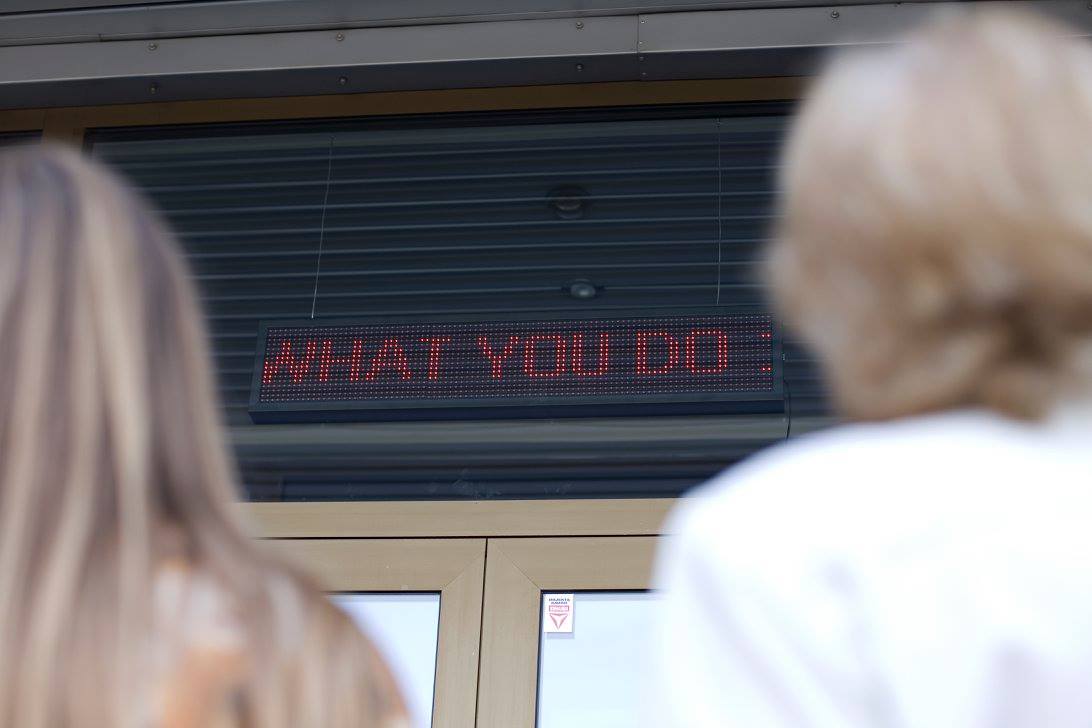
Moving Line / Einanti eilutė is a long-term artistic research project (2015–2025) that investigates public inscriptions as traces of lived presence in the city. Through a sustained practice of walking, the project gathers all manner of written signs found along urban peripheries—graffiti, scrawls, stickers, posters, etched texts—without privileging style, size, or material. These texts are later transcribed and uniformly formatted into a continuous typographic flow displayed on an LED screen more commonly associated with commercial signage.
Each iteration becomes a moving archive from a specific territory: the visual rhythm of public expression translated into a restrained, silent stream of anonymous language. Walking serves as both form and methodology: a conscious movement through overlooked zones, where the accumulation of informal, unofficial voices reflects the texture of a place beyond its official narratives. By equalizing all texts—regardless of authorship or social valence—the project poses questions about legibility, access, and the archive’s capacity to include the marginal or the ephemeral.
The scrolling LED display becomes more than just a surface; it operates as a non-linear reading space, where meaning is suspended and continually re-encountered. The result is not a curated message but an undirected flow—suggestive of memory, noise, protest, poetry.
2015 – Utena
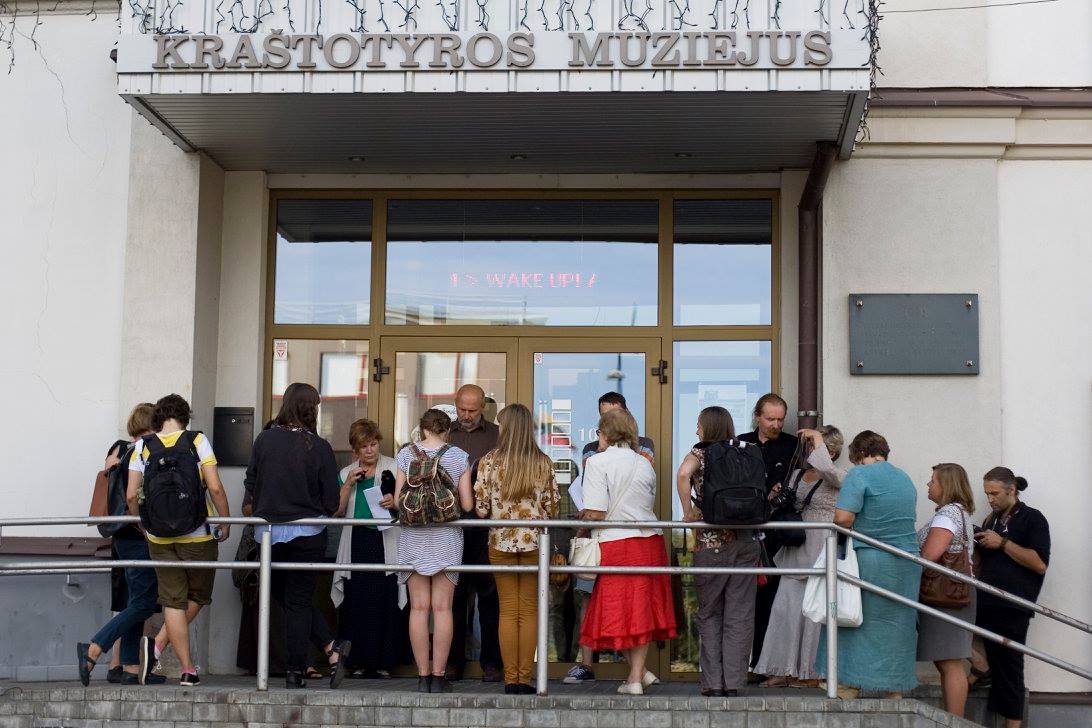
The work Moving Line was exhibited at the entrance of the Utena Regional Museum. This is a screen with a moving line. This type of screens is often used in advertising. The lines that are being displayed are writings, which were found on walls, benches, various ads, graffiti and etc. during the walk around Utena. Appearance of such texts in Ethnographic Museum indicates desire to archive, an attempt to make them into exhibits and prominence. Ethnographic Museum is a place where information about region’s past and present is collected and archived, so future generations could comprehend how their ancestors lived. In a sense, street „poetry” also presents contemporary human issues and the atmosphere of the city.
2016 – SODŲ 4, Vilnius
Texts were collected within a 1 km walking radius surrounding an artist-run space near the train station—an area dense with transitional infrastructure and visual residue. This documentation occurred during a period of intensive gentrification in this part of Vilnius, making it a final record of illegal inscriptions before their systematic removal from these rapidly changing neighborhoods.
2017 – “Lietuva” Cinema, Vilnius
Before the building’s demolition, all inscriptions inside the abandoned cinema were documented. This became a final documentation of the site’s voices—graffiti, comments, and markings left by visitors over years of abandonment. The resulting LED text stream preserved these layered traces just before the building’s complete physical erasure.
2019 – MO Museum – “DNA of the 90s”, Vilnius
For this exhibition exploring post-Soviet urban transformation, the artist reconstructed remembered texts from 1990s Vilnius, based on photograph archives and lived recollection—a speculative archive formed through memory.
2025 – Three Railroad Tracks to Vilnius
The latest edition involved three train journeys from Vilnius station to the first stop in three directions, returning along the tracks on foot. Along the way, all encountered inscriptions—urgent or fading—were gathered and re-presented as a unified, continuous LED text stream in the gallery.
„Einanti eilutė” – kūrinys, fiksuojantis viešosiose erdvėse aptinkamus nelegalius užrašus vaikštant pėsčiomis. Pradėtas 2015 metais, kūrinys kiekvieną kartą įgauna naują įgyvendinimo formą, pritaikytą konkrečiam eksponavimo laikui ir vietai.
Grafičiai, gatvės menas, rėžiniai, nelegalūs plakatai, lipdukai, ranka rašyti užrašai – visi tokie ėjimo metu pamatyti tekstai renkami be jokios hierarchijos, perskaitomi ir tipografiškai suvienodinami. Pateikiami LED bėgančios eilutės formatu, perimtu iš reklamos ir informacijos ekranų, jie tampa etnografiniu archyvu, paryškinant anonimines miesto istorijas ir laikmečio atmosferą.
„Einanti eilutė. Bėgiais į Vilnių” (2025)
Šį kartą „Pravaikštų klubo“ dalyviai leidosi į keliones traukiniu iš Vilniaus geležinkelio stoties visomis įmanomomis kryptimis. Išlipę pirmojoje stotelėje, jie pėsčiomis grįždavo į stotį, eidami palei bėgius ir rinkdami tekstus, kurie pasitinka į Vilnių atvykstančius keleivius.